My short documentary Camera Story will screen on Saturday at the 100 Words Film Festival.
[85 words to go. These don't count.]
You can read about the Official Selections, or read a preview of the festival, or read the festival's Twitter account, but you'll need to get your tickets right away.
[56 left. I'll try to get to the point.]
The thing that's interesting is that usually you make a film, then you try to get it out to an audience. Usually. But this time, I actually wrote the film based on the concept of the festival.
[81 down. Just 19 words to go. Big finish.]
It was not easy. You try writing a 100 word film.
[No, really. Try it. It's pretty fun. Write it, film it, and submit it next year so I can see it.]
I'll wait.
[There you go. A bit of tension. Now, defuse the situation.]
They have a cool poster, too.
Monday, November 17, 2014
Sunday, November 09, 2014
Why Film Festivals?
You can finish a film and post it to Vimeo and get it out to your audience in just an hour or so.
So ... why do film festivals still exist?
Well, we could talk about the festival experience, about the power of seeing a film as a community, about the sense of a special time and place, about creating scarcity and creating timeliness ... but let's set those aside for another time.
I'd like to argue that the reason film festivals are valuable is exactly the reason so many are frustrated with the experience of submitting to them: the gatekeeper process.
To me, the reason festivals still have value is exactly their strength as gatekeepers. Now, for many people ... that's a huge downside. Someone makes a judgment, and your film is kept out. Believe me, I've been on the receiving end of the "We've had more submissions than any previous year ... so we regretfully suggest you set fire to your film and go away ..." letter a lot of times. A lot. Many, many times.
As much as that can sting I feel better if I look at a festival schedule and -- whether I'm included or not -- see that they've done a serious job of making an interesting festival with seriously interesting filmmakers included.
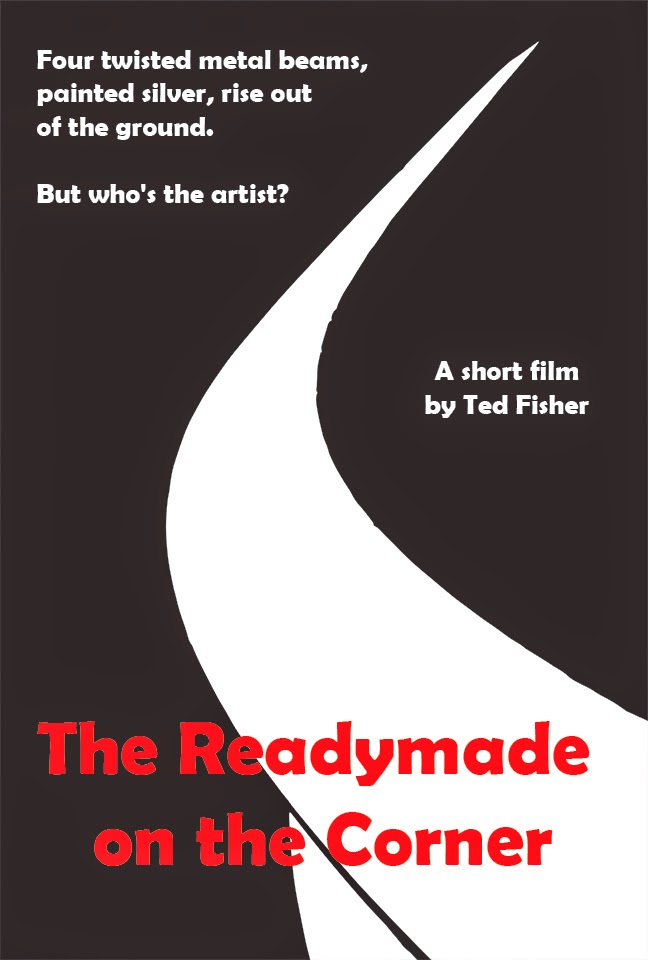
So, yesterday my short documentary The Readymade on the Corner screened at the New Urbanism Film Festival in Los Angeles. It was a good match to the themes of the festival. Probably some good films were kept out, but the listing I saw for the event seems right on target -- very current films addressing urbanism, architecture, street art and the desire so many have for a walkable, bikeable, new and exciting urban life.
"Readymade" addressed, in the form of a very short mystery, how one urban art experience came to exist. It asked a question people interested in that film festival could relate to, and possibly in an unexpected way. And bringing that to the festival is, in my opinion, good gatekeeping, good programming, good curating.
Now, up next is another short doc -- very short, actually -- showing in North Carolina. My short film Camera Story: DC215 will screen at the 100 Words Film Festival in Charlotte, NC on Saturday, November 22, 2014. You can get tickets here:
http://www.carolinatix.org/events/detail/100-words-film-festival
Creating this involved writing a script exactly 100 words in length, then filming the piece. The film didn't exist, even on paper, before I saw the listing for the film festival. It was made for the festival.
Now, that's even better gatekeeping -- the curatorial process inspired me and many (or perhaps all) of the other filmmakers in the fest. The challenge the fest set resulted in new films.
Here's why I'm taking this angle: the 100 Words Film Festival has put up a list of some of the filmmakers participating in the festival (I'm happy to be on it) and I feel it shows great gatekeeping.
https://www.facebook.com/notes/100-words-film-festival/filmmakers-announced-as-tickets-go-on-sale/1553243364893924
It's filled with interesting filmmakers:
I'm sure, like always, some great films were submitted but left out. But to me reading this list of filmmakers shows the programmers of this first-time festival had a great idea, provoked new work, and put it into a package that will make for great screenings.
Now ... imagine the straight-to-YouTube version of this challenge to make a 100-word film.
Possibly unwatchable, right? 500, maybe 1,000 submitted films being voted up quickly by the videomaker's friends. Good films lost with no votes, cheesy in-jokes rising to the top followed by Tweets pleading for more votes. There's a place for that, maybe, and there is something nicely democratic in having everyone's submissions out there a click away. But ... the result is typically a mess.
So, my answer to the "why festivals?" question is that the process, when handled well, is equivalent to the best curation museums strive to achieve.
As a viewer, I'm not here to hand out perfect-attendance awards. You made a film, and that's a quasi-miracle. On to step two, however: do I need to see it?
I want to see films that have some interest, some value, some character, some surprise, some connection to today. I want to avoid seeing films that depend on cliche and the current in-joke and that play out as clickbait.
Good curation, good programming, good gatekeeping is a strong step towards that. Film programs will still be hit and miss, of course, in the same way any room in a museum can be. But to get a screening, a program, a festival that far -- to the point that we can consider it curated art -- is a great result.
So ... why do film festivals still exist?
Well, we could talk about the festival experience, about the power of seeing a film as a community, about the sense of a special time and place, about creating scarcity and creating timeliness ... but let's set those aside for another time.
I'd like to argue that the reason film festivals are valuable is exactly the reason so many are frustrated with the experience of submitting to them: the gatekeeper process.
To me, the reason festivals still have value is exactly their strength as gatekeepers. Now, for many people ... that's a huge downside. Someone makes a judgment, and your film is kept out. Believe me, I've been on the receiving end of the "We've had more submissions than any previous year ... so we regretfully suggest you set fire to your film and go away ..." letter a lot of times. A lot. Many, many times.
As much as that can sting I feel better if I look at a festival schedule and -- whether I'm included or not -- see that they've done a serious job of making an interesting festival with seriously interesting filmmakers included.
So, yesterday my short documentary The Readymade on the Corner screened at the New Urbanism Film Festival in Los Angeles. It was a good match to the themes of the festival. Probably some good films were kept out, but the listing I saw for the event seems right on target -- very current films addressing urbanism, architecture, street art and the desire so many have for a walkable, bikeable, new and exciting urban life.
"Readymade" addressed, in the form of a very short mystery, how one urban art experience came to exist. It asked a question people interested in that film festival could relate to, and possibly in an unexpected way. And bringing that to the festival is, in my opinion, good gatekeeping, good programming, good curating.
Now, up next is another short doc -- very short, actually -- showing in North Carolina. My short film Camera Story: DC215 will screen at the 100 Words Film Festival in Charlotte, NC on Saturday, November 22, 2014. You can get tickets here:
http://www.carolinatix.org/events/detail/100-words-film-festival
Creating this involved writing a script exactly 100 words in length, then filming the piece. The film didn't exist, even on paper, before I saw the listing for the film festival. It was made for the festival.
Now, that's even better gatekeeping -- the curatorial process inspired me and many (or perhaps all) of the other filmmakers in the fest. The challenge the fest set resulted in new films.
Here's why I'm taking this angle: the 100 Words Film Festival has put up a list of some of the filmmakers participating in the festival (I'm happy to be on it) and I feel it shows great gatekeeping.
https://www.facebook.com/notes/100-words-film-festival/filmmakers-announced-as-tickets-go-on-sale/1553243364893924
It's filled with interesting filmmakers:
Linda Midgett: Based in Charlotte, Linda is an Emmy-award winning director/writer/producer. She has written and directed multiple documentary films and produced for networks including A&E, Discovery, and NBC-Universal. Her inventive film takes a fresh look at the current immigration crisis.
Mitchell Rose: The Washington Post acclaimed his work as “…in the tradition of Chaplin, Keaton, and Tati – funny and sad and more than the sum of both.”
David Johnson: Filmmaker, photographer,author, lecturer and founder of Silent Images, a Charlotte-based nonprofit organization devoted to telling both local and global stories of those who are most unheard.
Dana Wilson: Writer/director/editor/production coordinator/supervisor. A former producer on the ABC series Desperate Housewives, her comedic short showcases an entirely different kind of desperation.
Nick Confalone: Nick is best known for writing and directing six-second Vines. His work has been featured on CNN, The Ellen Degeneres Show, and at the Tribeca Film Festival.
Cecil Stokes and Josh Summers: Cecil and Josh are award-winning producers with over 500 television credits on networks including A&E, ESPN, Food Network, HGTV, Ovation, OWN and Turner.
Anna Christopher and Regina Taufen: Bringing a trio of comedic films to the festival, the credits of this LA-based duo include the MTV series, Awkward, and feature films including Night at the Museum and Date Night.
Beverly Penninger and Alyson Young: Local filmmakers, their collection of award-winning films includes: Wild in Corolla, The Spirit of Sacajawea,and The Newport Effect.
Eric Davis: Locally-based writer/producer of documentaries, television and online content for more than twenty years.Now, my short doesn't have a hope of winning anything against that crowd -- it's a pretty simple film and the goal was never "winning" anything, anyway. But, as they say, it's an honor to be in such great company.
I'm sure, like always, some great films were submitted but left out. But to me reading this list of filmmakers shows the programmers of this first-time festival had a great idea, provoked new work, and put it into a package that will make for great screenings.
Now ... imagine the straight-to-YouTube version of this challenge to make a 100-word film.
Possibly unwatchable, right? 500, maybe 1,000 submitted films being voted up quickly by the videomaker's friends. Good films lost with no votes, cheesy in-jokes rising to the top followed by Tweets pleading for more votes. There's a place for that, maybe, and there is something nicely democratic in having everyone's submissions out there a click away. But ... the result is typically a mess.
So, my answer to the "why festivals?" question is that the process, when handled well, is equivalent to the best curation museums strive to achieve.
As a viewer, I'm not here to hand out perfect-attendance awards. You made a film, and that's a quasi-miracle. On to step two, however: do I need to see it?
I want to see films that have some interest, some value, some character, some surprise, some connection to today. I want to avoid seeing films that depend on cliche and the current in-joke and that play out as clickbait.
Good curation, good programming, good gatekeeping is a strong step towards that. Film programs will still be hit and miss, of course, in the same way any room in a museum can be. But to get a screening, a program, a festival that far -- to the point that we can consider it curated art -- is a great result.
Saturday, November 08, 2014
Screening at LABART
Today at 3 p.m., my short documentary The Readymade on the Corner will screen at the New Urbanism Film Festival in Los Angeles as part of the Street Art Short Films program.
The venue is LABART, which is "the largest art gallery in the nation dedicated to street art." The gallery is at 217 S. La Brea Avenue.
You can get tickets at the door or here:
http://www.eventbrite.com/e/street-art-short-films-tickets-13694284975
Saturday, October 25, 2014
Readymade at New Urbanism Film Festival

My short documentary The Readymade on the Corner will screen at the New Urbanism Film Festival in Los Angeles on Saturday, November 8 at 3 p.m. as part of the Street Art Short Films program.
You can get tickets here:
http://www.eventbrite.com/e/street-art-short-films-tickets-13694284975
Camera Story to Screen at 100 Words Film Festival

My short film Camera Story: DC215 will screen at the 100 Words Film Festival in Charlotte, NC on Saturday, November 22, 2014.
You can get tickets here:
http://www.carolinatix.org/events/detail/100-words-film-festival
The final film, in my case, is very short -- but I think it tells a story. The process involved writing a script exactly 100 words in length, then filming the piece. That's quite an interesting challenge!
Last Book Read: The Five Cs of Cinematography
Previously, I reviewed Gustavo Mercado's The Filmmaker's Eye: Learning (and Breaking) the Rules of Cinematic Composition and complained about two problems:
Okay, great. But ... is that book good, or just omnipresent?
I'm glad you asked.
Who is it for?
Joseph V. Mascelli's book has long been a seemingly simple guide to practical cinematography. It focused on an approach breaking down the art into five components:
But ... ?
My issue with it has always been that the "Cs" would be better if restated as questions. For example, let's apply some "Ws" to the issue:
What does it cover?
The book addresses examples of those Five Cs, using a dollop of theory but mainly demonstrating a practical approach. It gets right into "types of camera angles" and "filming techniques" as, essentially, lists with examples.
How well does it work?
The "this is how we do it" approach seems to lack the balance of an effective "because doing it this other way leads to this problem..." element that seems natural here. In other words, it's a guide, but would be stronger with a series of warning callouts presented in a clearer way.
As in: shoot a Medium Shot this way, don't shoot it this way because X, Y, Z.
There are, in fact, many "don'ts" listed --
Think of the difference between "Here's the local building code ..." [ drops book on desk ]
versus
"We'll show you how to make a chair first ... and then how those techniques are applied to a shed ... and then the additional skills needed for a barn ... and in volume 2 we'll get to house framing."
Okay ... but should I read it?
That's a tricky question. I think the best way to answer it is to take a close look at the work of the book's author. I mean, if he's a great cinematographer, it will probably be a great book ... right?
So, what did Joseph V. Mascelli shoot? Could I see any of it on Netflix?
Well, you can probably find:
The Incredibly Strange Creatures Who Stopped Living and Became Mixed-Up Zombies!!?
You can see the trailer for that here:
http://www.imdb.com/video/screenplay/vi3415277849/
REALLY? HE SHOT THAT?
Yes. And a few other really, really odd films. I mean ... puzzlingly odd.
Recommendation
Read it in sequence with related books and form a bigger picture you can apply to your own practice.
- It disagreed, using a tone of certainty, with standard definitions of shots in the language of cinema.
- It overemphasized "breaking the rules" to the point that it became vague.
Okay, great. But ... is that book good, or just omnipresent?
I'm glad you asked.
Who is it for?
Joseph V. Mascelli's book has long been a seemingly simple guide to practical cinematography. It focused on an approach breaking down the art into five components:
- Camera Angles
- Continuity
- Cutting
- Close-Ups
- Composition
But ... ?
My issue with it has always been that the "Cs" would be better if restated as questions. For example, let's apply some "Ws" to the issue:
- What are the camera angles commonly used in filmmaking?
- What determines if one shot will edit well to another shot in continuity editing?
- What factors determine how a shot can be used in cutting a series of shots?
- Why, practically, is filming close-ups different from more general shooting?
- What factors in shot composition have an impact on the edit and the film?
What does it cover?
The book addresses examples of those Five Cs, using a dollop of theory but mainly demonstrating a practical approach. It gets right into "types of camera angles" and "filming techniques" as, essentially, lists with examples.
How well does it work?
The "this is how we do it" approach seems to lack the balance of an effective "because doing it this other way leads to this problem..." element that seems natural here. In other words, it's a guide, but would be stronger with a series of warning callouts presented in a clearer way.
As in: shoot a Medium Shot this way, don't shoot it this way because X, Y, Z.
There are, in fact, many "don'ts" listed --
"Don't show a player looking off-screen, then cut to what he sees -- and pan the camera around and end up on the player. This will jar the audience, because a person cannot see himself as he looks about! What starts off as a point-of-view shot becomes a straight objective shot, as soon as the player is included."And that's good advice, right? But read it carefully and the tonal issue of the book becomes clear: it suffers very much from the common problem experts experience when they begin to teach. Instead of being an expert on what material a student / learner needs, and then comprehending the best system to deliver that material, the book presents material (good material!) without a real understanding of the best way we will learn that material.
Think of the difference between "Here's the local building code ..." [ drops book on desk ]
versus
"We'll show you how to make a chair first ... and then how those techniques are applied to a shed ... and then the additional skills needed for a barn ... and in volume 2 we'll get to house framing."
Okay ... but should I read it?
That's a tricky question. I think the best way to answer it is to take a close look at the work of the book's author. I mean, if he's a great cinematographer, it will probably be a great book ... right?
So, what did Joseph V. Mascelli shoot? Could I see any of it on Netflix?
Well, you can probably find:
The Incredibly Strange Creatures Who Stopped Living and Became Mixed-Up Zombies!!?
You can see the trailer for that here:
http://www.imdb.com/video/screenplay/vi3415277849/
REALLY? HE SHOT THAT?
Yes. And a few other really, really odd films. I mean ... puzzlingly odd.
Recommendation
Read it in sequence with related books and form a bigger picture you can apply to your own practice.
Thursday, September 18, 2014
Hanging Downtown (Full Movie)
Hanging Downtown from Ted Fisher on Vimeo.
Here, finally, is the full 15-minute film "Hanging Downtown."
Please, after you watch it, go to:
http://www.imdb.com/title/tt2170278/
and sign in (there are several options, including using FaceBook)
and give it an honest rating.
Thanks!
Monday, September 01, 2014
Last Book Read: The Filmmaker's Eye
Last book read:
Gustavo Mercado's The Filmmaker's Eye: Learning (and Breaking) the Rules of Cinematic Composition.
Who is it for?
Mercado's book can be used in a class introducing the basics of cinematography or filmmaking, but can work as a refresher for more advanced practitioners of the craft.
What does it cover?
The approach here is to break down the "standard shots" used in filmmaking, considering both the technical and aesthetic concepts behind the standard approach. Then, as counterpoint, examples of breaking these standard rules effectively are given and discussed. So, a typical chapter is titled "Medium Close Up."
How well does it work?
I recommend this book, but I think two problems interfere with how effective it can be in a classroom or for personal study. If the reader is informed of those two issues, it is well worth the read.
Two problems?
The first problem: Mercado is incorrect in the definition of certain shots, and a student comparing this to more standardized practice will be confused. (I find this really puzzling myself, and pulled out several cinematography textbooks for comparison.) The book's definition of a "Close Up" is generally considered a version of an "Extreme Close Up" in general cinematography textbooks, and this sets up an examination of each shot that is very closed (and a bit too narrow) in definition.
As an example, if we study this book's example of a "Medium Close Up" we read:
"The size of the subject in this medium close up requires that the top of the head is cropped to give him the proper amount of headroom."
Well, that's a bit confusing -- we crop into the head to give headroom?
More importantly, however, is that this proposed definition:
is often considered a Close Up, and many directors would consider a looser framing as a workable "Medium Close Up." For example, if you turn on a typical TV news program, you might see:
Mercado doesn't address this very common news/documentary framing -- it doesn't exist in the book, implying it wouldn't be acceptable. I would be happier with a more open approach -- obviously "standard" shots expand out into variations, and that's fine. So Mercado's implied "here's the right way" becomes an issue. If this is an issue that can be discussed in a class (or in one's personal reading of the book) that will be fine. But it's written as if the shot examined in the book is a closed truth, rather than one example of many possibilities.
The second problem, in my view, is that book puts so much energy into the "breaking the rules" aspect of the discussion ... yet some of the examples are nearly identical to the shots discussed as standard. The framing of the "breaking the rules" shot under "Medium Close Up" is essentially identical to the main shot presented.
So ... what does Mercado say makes it "break the rules"? That it is used "by itself" rather than in a progression of shots toward a Close Up. This is a strange interpretation, and really focuses on editing choices rather than cinematography.
But ... you like it?
Yes, I think this is a good book, and worth the space on a filmmaker / film student's bookshelf. Take the definitions with a grain of salt (and learn from where you personally disagree, or from examples that differ). It places a system of shots at the heart of the study of cinematography, and serves as a good introduction to a key concept.
Recommendation
Read it in sequence with related books and form a bigger picture you can apply to your own practice.
Gustavo Mercado's The Filmmaker's Eye: Learning (and Breaking) the Rules of Cinematic Composition.
Who is it for?
Mercado's book can be used in a class introducing the basics of cinematography or filmmaking, but can work as a refresher for more advanced practitioners of the craft.
What does it cover?
The approach here is to break down the "standard shots" used in filmmaking, considering both the technical and aesthetic concepts behind the standard approach. Then, as counterpoint, examples of breaking these standard rules effectively are given and discussed. So, a typical chapter is titled "Medium Close Up."
How well does it work?
I recommend this book, but I think two problems interfere with how effective it can be in a classroom or for personal study. If the reader is informed of those two issues, it is well worth the read.
Two problems?
The first problem: Mercado is incorrect in the definition of certain shots, and a student comparing this to more standardized practice will be confused. (I find this really puzzling myself, and pulled out several cinematography textbooks for comparison.) The book's definition of a "Close Up" is generally considered a version of an "Extreme Close Up" in general cinematography textbooks, and this sets up an examination of each shot that is very closed (and a bit too narrow) in definition.
As an example, if we study this book's example of a "Medium Close Up" we read:
"The size of the subject in this medium close up requires that the top of the head is cropped to give him the proper amount of headroom."
Well, that's a bit confusing -- we crop into the head to give headroom?
More importantly, however, is that this proposed definition:
- the top of the frame cropped into the subject's head
- the bottom of the frame is shown at the shirt pocket of the subject
is often considered a Close Up, and many directors would consider a looser framing as a workable "Medium Close Up." For example, if you turn on a typical TV news program, you might see:
- the top of the frame just above the subject's head
- the bottom of the frame at the shirt pocket
Mercado doesn't address this very common news/documentary framing -- it doesn't exist in the book, implying it wouldn't be acceptable. I would be happier with a more open approach -- obviously "standard" shots expand out into variations, and that's fine. So Mercado's implied "here's the right way" becomes an issue. If this is an issue that can be discussed in a class (or in one's personal reading of the book) that will be fine. But it's written as if the shot examined in the book is a closed truth, rather than one example of many possibilities.
The second problem, in my view, is that book puts so much energy into the "breaking the rules" aspect of the discussion ... yet some of the examples are nearly identical to the shots discussed as standard. The framing of the "breaking the rules" shot under "Medium Close Up" is essentially identical to the main shot presented.
So ... what does Mercado say makes it "break the rules"? That it is used "by itself" rather than in a progression of shots toward a Close Up. This is a strange interpretation, and really focuses on editing choices rather than cinematography.
But ... you like it?
Yes, I think this is a good book, and worth the space on a filmmaker / film student's bookshelf. Take the definitions with a grain of salt (and learn from where you personally disagree, or from examples that differ). It places a system of shots at the heart of the study of cinematography, and serves as a good introduction to a key concept.
Recommendation
Read it in sequence with related books and form a bigger picture you can apply to your own practice.
Tuesday, August 05, 2014
Saturday, August 02, 2014
Timelapse Plus Tiltdown
This was a test shoot to learn how to create a timelapse shot with a camera tilt down at the beginning.
Friday, August 01, 2014
Timelapse Experiment
Cloudlapse from Ted Fisher on Vimeo.
I wanted to create a timelapse that also slowly zoomed out.
So, here's how I did it:
- I shot stills at an interval of 2 seconds apart. I shot for about 15 minutes.
- These were then dropped into a 1080/30p sequence in Adobe Premiere. Each still became one frame in the video.
- Since each frame was 2 seconds apart, one minute of shooting creates 30 frames or about 1 second of video. So - 1 minute of filming equals one second of timelapse video.
- This sequence was exported as a QuickTime movie at 1920 by 1080, 30 frames per second.
- The exported clip was imported back into Premiere and dropped into a 720p/30 sequence.
- By using keyframes to control "scale" I was able to start with the clip at 100% scale -- larger than the 1280 by 720 frame of the video, and therefore "zoomed in" -- and then set a keyframe at 67% scale ("zoomed out"). This keyframed change in scale results in the feeling of zooming out.
Monday, February 10, 2014
Nature Calls

This answers at least one age-old question.
Sunday, September 15, 2013
Sunday, September 08, 2013
Editing "Escape / Artist"

I'm working on the edit for Escape Artist. Two major sections of the film are shot, but there's more to do.
Above: Jason Escape in San Diego.
Friday, August 16, 2013
Jazz Friday
A member of the Luther Hughes & Cannonball / Coltrane Project plays the saxophone at Los Angeles County Museum of Art, Friday, August 16, 2013.
Monday, June 10, 2013
On the Richter Scale

Saw a few Hans Richter films.
- Rhythmus 21
- Rhythmus 23
- Filmstudie
- Inflation
- Ghosts Before Breakfast
- Race Symphony
- Zweigroschenzauber
- Alles dreht sich, alles bewegt sich
- Die neue Wohnung
Ghosts Before Breakfast is the best.
Wednesday, May 22, 2013
One Complete Year: The Film Festival Run
I've been tracking (and learning from) the film festival "run" of my short documentary film "Hanging Downtown." The idea is to learn from how the process went for this 15-minute-long film so that we can do better when we finish our feature-length doc.
Shot in April 2010, completed about two years later, and submitted to film fests starting May 24, 2012, one year ago.
It's had a good run so far. So, where are we? To date:
- five festival acceptances
- nine festival rejections
- one festival that has delayed or cancelled
Here's the scorecard:
| FILM FESTIVAL | Entry Date | Notification | Result | |
| Coney Island Film Festival | 24-May-12 | 28-Aug-12 | Screened 22-Sep-12 | |
| 24-May-12 | 6-Jan-13 | Not accepted. | ||
| San Francisco Documentary Festival | 26-May-12 | 25-Sep-12 | Screened 10-Nov-12 | |
| 26-May-12 | 27-Sep-12 | Not accepted. | ||
| 16-Jun-12 | 15-Aug-12 | Not accepted. | ||
| 16-Aug-12 | 1-Feb-13 | Not accepted. | ||
| Winnipeg Real to Reel Film Festival | 14-Sep-12 | 15-Jan-13 | Screened 16-Feb-13 | |
| 16-Sep-12 | 7-Jan-13 | Not accepted. | ||
| Boston International Film Festival | 16-Sep-12 | 12-Mar-13 | Screened 15-Apr-13 | |
| 16-Sep-12 | 25-Mar-13 | Not accepted. | ||
| 22-Sep-12 | Fest cancelled? | |||
| Thin Line Film Fest | 27-Sep-12 | 4-Jan-12 | Screened 13-Feb-13 | |
| 4-Nov-12 | 10-May-13 | Not accepted. | ||
| 17-Nov-12 | 30-Apr-13 | Not accepted. | ||
| 20-Nov-12 | 8-May-13 | Not accepted. |
Numbers worth considering:
The Fees: $362.
The Odds: Rooftop Films said they received 2,800 submissions. We didn't make it into that one, but did make it into others that had hundreds of submissions, so we feel pretty lucky.
The Communication: One festival sent a nice note explaining the film made it to the last decision round and just missed. Another festival sent no email, no Withoutabox notification, nothing -- just cashed the check and then put us on their email list asking for financial support.
The Love: Film festivals give shorts very little love. Some. Just a lot less than features. So you really have to promote and publicize as if they aren't going to do anything at all, then be happy if there's any significant support on that front. Maybe you'll have better luck than we did. We received some support, and a great deal of friendliness ... but we should have worked to gain more (any) media coverage.
The Screenings: My wife and I attended two of the screenings in San Francisco. The first was great, the second had technical difficulties -- and that was very frustrating. Our film's subject attended the screening in Boston and said it went very well, but the screening was the same day as the bombings at the Boston Marathon, sadly.
The Followup: Very few of the folks who saw the film gave it a vote on IMDB. (Based on the timing of the events.) One brief review came out of SF DocFest.
So ... is the film festival approach a good one? Let's discuss that in upcoming posts....
Monday, April 29, 2013
Paris Photo

Saw all the latest from the photo world this weekend at Paris Photo.
Paris Photo, you ask?
You know... "the most prestigious art fair dedicated to historical and contemporary photography. This fair takes place annually at the Grand Palais in Paris mid-November and at the Paramount Pictures Studios in Los Angeles at the end of April."
That one.
Sunday, April 28, 2013
Hanging Downtown Screened in Boston
Hanging Downtown screened at the Boston International Film Festival on Monday.
The screening was at approximately the same time the bombs went off at the finish line of the Boston Marathon, sadly.
I spoke to Jason Escape by phone right after the screening ended, as events became known. Apparently the screening went very well -- the film looked great on the big screen, and sounded good, and Jason spoke at the Q&A session -- but in light of these other events, it's been impossible to celebrate or to even think about the film.
So, here's to hoping that when the new film -- Escape/Artist -- is complete, we make it into one of the Boston festivals, and get to attend a screening there, and that Boston has only peaceful events in its future.
Thursday, April 04, 2013
Screening: Let's All Be Free Film Festival
My short documentary Rolling on the Floor screens on Friday, April 5, 2013 at the Let's All Be Free Film Festival in London.
It features Killebrew Mason and was made with Kirk Dilley and Matt Conway.
Rolling On The Floor
4 min - USA - 2012 | dir. Ted Fisher | INTERNATIONAL PREMIERE
They
say you should dance like no one is watching ... but what happens when
you do? When the idea of free, unrestrained self expression crashes into
the vanity and pride of youth, which wins out? When Killebrew Mason
went to the college dance, she knew it would be a moment she'd never
forget. She just didn't know why.
Sunday, March 10, 2013
60-second Trailer for "Hanging Downtown"
60-second Trailer for Hanging Downtown from Ted Fisher on Vimeo.
Previously, Hanging Downtown had a trailer that was 1 minute, 42 seconds long. Now, here's a 60-second version.
Saturday, March 09, 2013
Rolling on the Floor Screens in London
My short documentary Rolling on the Floor screens April 5, 2013 at the Let's All Be Free Film Festival. So check out the trailer for the festival (above).
Tuesday, February 19, 2013
Let's All Be Free

Some notions take a long time.
In January 2010, I had an idea for a mini-documentary, and decided the best way to approach it would be to find an interview subject on Twitter. Believe it or not ... it worked.
As you probably know, however ... there are always complications. In fact, in this case, there were many delays. The film -- less than five minutes long --wasn't completed until March 03, 2012. From there, the filtering process of finding, entering, and being accepted into film festivals has meant that no one has seen it yet. Finally, though, we've got the good word: two festivals have accepted the film -- Rolling on the Floor -- and will screen it.
I'll write more about the March screening soon.
Today, though, I want to direct your attention to our April 5th screening in London at the Let's All Be Free Film Festival.
The festival will be held in Central London at the Brunei Gallery, part of the School of Oriental and African Studies at the University of London.
Let’s All Be Free Film Festival aims to explore and celebrate what it means to be free. We seek to create a comfortable and open forum that will encourage constructive dialogue and debate around the notion of being free, with the aim of creating greater understanding and awareness around this vital issue. We want to use this enhanced knowledge and insight to implement a tangible, positive force for good in the world around us, and inspire others to do the same.
One of the ways we want to achieve this is through creative expression – through the powerful and timeless medium of film. We seek to find the best, boldest and brightest cinematic expressions of being free, and showcase them to the world.
(Above: poster for the festival designed by Tim Leete of Creative Meld.)
Friday, February 15, 2013
Rolling on the Floor to Screen in London

My short film "Rolling on the Floor" is in competition at the Let's All Be Free Film Festival, scheduled to screen April 5, 2013.
I feel lucky: the fest notes that
"Out of the 675 films that were submitted to our film festival from all over the world, we've managed to choose the official selection of 37 films that will screen in competition at our film festival."More on the film -- and another festival screening -- soon.
Thursday, February 14, 2013
Hanging Downtown Screens in Winnipeg

My short documentary "Hanging Downtown" will screen at the Winnipeg Real to Reel Film Festival two times this weekend:
- Saturday, February 16th, Noon
- Sunday, February 17th, 5:30 p.m.
You can see the trailer for the film, or find out the backstory, here:
http://tedfisher.com/hangingdowntown/
Wednesday, February 13, 2013
Hanging Downtown Screens Today
My short documentary "Hanging Downtown" screens at Thin Line Film Festival today.
I have a page all about making the film right here:
http://tedfisher.com/hangingdowntown/
You can see the trailer for the film here:
Trailer for "Hanging Downtown" from Ted Fisher on Vimeo.
Sunday, February 10, 2013
Update: The Film Fest Run
I've been tracking (and learning from) the film festival "run" of my short documentary film "Hanging Downtown."
Shot in April 2010, completed about two years later, and submitted to film fests starting May 24, 2012, it's had a good run so far. So, where are we? To date:
- five festival acceptances
- five festival rejections
- awaits notification from five fests
The current batting average, then, is 50%, and the total acceptance rate will be at least 33%. (Unless we submit to further fests or receive requests from them.)
Here's the scorecard:
| FILM FESTIVAL | Entry Date | Notification | Result | |
| Coney Island Film Festival | 24-May-12 | 28-Aug-12 | Screened 22-Sep-12 | |
| Big Sky Documentary Film Festival | 24-May-12 | 6-Jan-13 | Not accepted. | |
| San Francisco Documentary Festival | 26-May-12 | 25-Sep-12 | Screened 10-Nov-12 | |
| New Hampshire Film Festival | 26-May-12 | 27-Sep-12 | Not accepted. | |
| Chagrin Documentary Film Festival | 16-Jun-12 | 15-Aug-12 | Not accepted. | |
| True False Film Festival | 16-Aug-12 | 1-Feb-13 | Not accepted. | |
| Winnipeg Real to Reel Film Festival | 14-Sep-12 | 15-Jan-13 | Screening 16-Feb-13 | |
| Sebastopol Documentary Film Festival | 16-Sep-12 | 7-Jan-13 | Not accepted. | |
| Boston International Film Festival | 16-Sep-12 | 12-Mar-13 | Screening 15-Apr-13 | |
| Independent Film Festival of Boston | 16-Sep-12 | 25-Mar-13 | Waiting | |
| Detroit Docs | 22-Sep-12 | Waiting | ||
| Thin Line Film Fest | 27-Sep-12 | 4-Jan-12 | Screening 13-Feb-13 | |
| Rooftop Films | 4-Nov-12 | 10-May-13 | Waiting | |
| Biografilm Festival | 17-Nov-12 | 30-Apr-13 | Waiting | |
| Olhar de Cinema - Curitiba Int'l Film Festival | 20-Nov-12 | 8-May-13 | Waiting |
What's next? Well, there are three screenings this week:
Thin Line Film FestivalAnd then another in April:
Wednesday, February 13th, 6:00 p.m.
Winnipeg Real to Reel Film Festival
Saturday, February 16th, Noon
Sunday, February 17th, 5:30 p.m.
Boston International Film Festival
Monday, April 15 2:00 p.m
(tentative schedule, subject to change)
And there's one other surprise ahead. More news on that soon....
Friday, February 08, 2013
Upcoming Screenings
Upcoming screenings of Hanging Downtown:
Thin Line Film Festival
Wednesday, February 13th, 6:00 p.m.
Winnipeg Real to Reel Film Festival
Saturday, February 16th, Noon
Sunday, February 17th, 5:30 p.m.
Boston International Film Festival
Monday, April 15 2:00 p.m
(tentative schedule, subject to change)
Saturday, January 26, 2013
The Film Fest Run - What Have We Learned?
On May 24, 2012, I completed "Hanging Downtown" and started submitting it to film festivals. You can read the background on how and why the film was made here:
Hanging Downtown: Directed by Ted Fisher
Now, eight months later, the film ...
- has screened at two festivals
- is set to screen at two more
- awaits notification from seven fests
- was "not accepted" at four events
Let's look at the scorecard:
| FILM FESTIVAL | Entry Date | Notification | Result | |
| Coney Island Film Festival | 24-May-12 | 28-Aug-12 | Screened 22-Sep-12 | |
| Big Sky Documentary Film Festival | 24-May-12 | 6-Jan-13 | Not accepted. | |
| San Francisco Documentary Festival | 26-May-12 | 25-Sep-12 | Screened 10-Nov-12 | |
| New Hampshire Film Festival | 26-May-12 | 27-Sep-12 | Not accepted. | |
| Chagrin Documentary Film Festival | 16-Jun-12 | 15-Aug-12 | Not accepted. | |
| True False Film Festival | 16-Aug-12 | 1-Feb-13 | Waiting | |
| Winnipeg Real to Reel Film Festival | 14-Sep-12 | 15-Jan-13 | Screening 16-Feb-13 | |
| Sebastopol Documentary Film Festival | 16-Sep-12 | 7-Jan-13 | Not accepted. | |
| Boston International Film Festival | 16-Sep-12 | 12-Mar-13 | Waiting | |
| Independent Film Festival of Boston | 16-Sep-12 | 25-Mar-13 | Waiting | |
| Detroit Docs | 22-Sep-12 | Waiting | ||
| Thin Line Film Fest | 27-Sep-12 | 4-Jan-12 | Screening 13-Feb-13 | |
| Rooftop Films | 4-Nov-12 | 10-May-13 | Waiting | |
| Biografilm Festival | 17-Nov-12 | 30-Apr-13 | Waiting | |
| Olhar de Cinema - Curitiba Int'l Film Festival | 20-Nov-12 | 8-May-13 | Waiting |
Four yes, four no, seven to be decided. A long, slow process. And it's likely a lot will happen in the next four months.
So ... let's revisit this May 24, 2013.
Sunday, January 13, 2013
Hanging Downtown Trailer
Trailer for "Hanging Downtown" from Ted Fisher on Vimeo.
Here is the trailer for my short documentary "Hanging Downtown."
In February, the film screens at Thin Line Film Festival and at Winnipeg Reel to Real Film Festival.
More about the film here or check out the film's IMDB page.
Tuesday, December 25, 2012
Wednesday, December 19, 2012
On Love

Carrots, Wednesday, December 19, 2012.
Labels:
carrots,
food,
food photography,
love,
orange,
produce,
vegetables
Monday, November 12, 2012
DocFest #DocFest2012

Ted Fisher stands outside the Roxie Theater during the San Francisco Documentary Festival, Monday, November 12, 2012. (Photo: Karen K. Barber)
Saturday, November 10, 2012
Hanging Downtown Screens Today

My short documentary Hanging Downtown screens today at 5 p.m. at the Roxie. It's part of San Francisco Documentary Festival. If you've seen the film, go to its IMDB page and give it a rating or a review. Thanks!
Sunday, November 04, 2012
Six Days Until Screening
On November 10th, 12th and 14th my short documentary "Hanging Downtown" is screening at the San Francisco Documentary Festival.
Don't think, however, that you only get my film for the price of your ticket. All three screenings are paired with a really exciting documentary called:
“Without A Net.”
It's made by director Kelly J. Richardson, and I encourage you to come and see it.
(It's the same ticket, see ... so come see both.)
Above: check out this episode of Ondi Timoner's B.Y.O.D. (Bring Your Own Doc) show, which features Ms. Richardson speaking about the film.
Saturday, November 03, 2012
Seven Days Until Screening

There's a new site posted for my short documentary "Hanging Downtown." It gives a bit of background on the film, and links everything about it in one place. Check it out here:
Above: the promo postcard for the film.
Tuesday, October 16, 2012
Hanging Downtown, San Francisco Documentary Festival

My short documentary on escape artist Jason Escape will screen at San Francisco Documentary Festival on ...
- Saturday, November 10, at 5 p.m.
- Monday, November 12 at 9:30 p.m.
- Wednesday, November 14 at 7:15 p.m.
More information on the film is here: Hanging Downtown.
Thursday, October 04, 2012
This Is My Photo of Gaffer's Tape

I say if you're gonna make a photo of gaffer's tape, then make a photo of gaffer's tape.
Wednesday, October 03, 2012
The Dance Project
Tuesday, October 02, 2012
The Scan Project
Sunday, September 09, 2012
Hanging Downtown screens at Coney Island Film Festival

My film "Hanging Downtown" will screen at the Coney Island Film Festival at 5 p.m. on September 22, 2012 in Program 5.
Strapped into a straitjacket, tied up with rope, and hung upside down, Jason Escape risks his life and his pride to make Boston audiences see the world his way.It features Jason Escape, and includes music by Sherwin Smith and Dennis Perez
Subscribe to:
Posts (Atom)